
Blackjack House Edge Explained: What the Numbers Actually Mean at the Table
Blackjack house edge explained properly means looking past the superstition and reading the maths behind every decision. The odds shift depending on the rules you play, and the same hand can carry a different cost depending on how the table is set up. I design payment and casino interfaces for a living, so I care about clarity before anything else.
How the maths works when you sit down
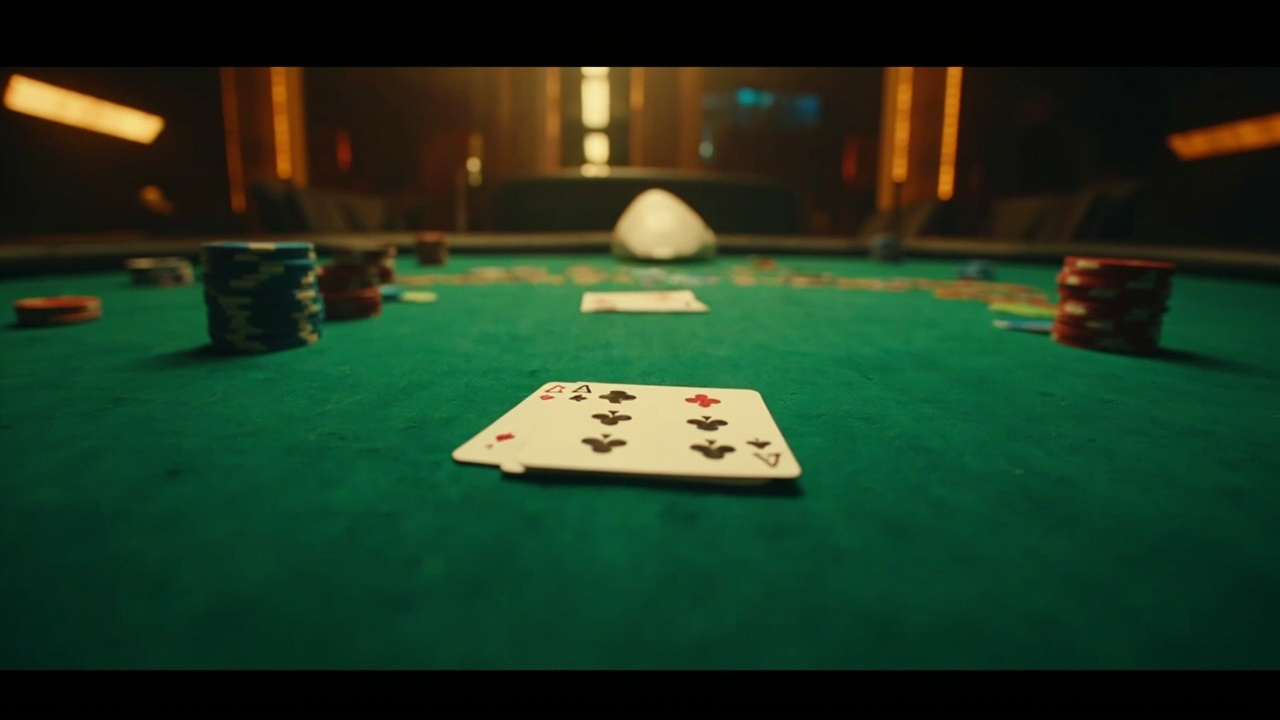
When you first pull up a chair, the numbers can feel intimidating, but they boil down to a few fixed rules. The house edge is simply the long-term advantage built into the game, and in blackjack it usually sits somewhere around half a percent when you play with basic strategy. I have spent a decade shaping transaction screens where people hand over real money, and the same principle keeps showing up: chips psychologically distance players from real money, making it easier to bet. That distance is useful until it is not, because the edge does not care how relaxed you feel at the table.
The rules on your local floor matter more than most people reckon. A dealer that stands on soft 18, doubling only on certain totals, or a table that pays 6:5 on blackjack instead of 3:2 can quietly move the edge by a full percentage point. Those details are baked into the game design, and they are the same kind of structural choices I weigh when I am deciding how a lobby should surface the right table for the right player. Every rule change is a small tax on decision-making, and the best tables are the ones that keep that tax as low as possible.
Where the edge shows up in practice
Dealer rules and payout quirks
The biggest swings in the edge come from the rules the dealer has to follow. A table that forces the dealer to hit on soft 17 adds a little more pressure to every hand, while a stand-on-soft-17 rule keeps things tighter. The same logic applies to blackjack payouts, and this is where I see the most avoidable mistakes in casino product design overseas. In the US and parts of Europe, 3:2 blackjack payouts are still common on proper tables, but some operators push 6:5 deals that look friendly until you run the numbers. Down Under, we tend to be blunt about these details in the lobby copy, and that is a better habit than hiding the maths behind a flashy badge.
Strategy, superstition, and independent outcomes
Despite every superstition, each independent game outcome remains governed purely by probability. A lucky streak feels real, and a cold run feels personal, but neither changes what the next card is likely to do. Basic strategy is the closest thing to a reliable map you get, and it only works if you actually follow it instead of improvising on a whim. In regional New South Wales, where a local club floor might run a slower, quieter session on a Tuesday arvo, the temptation to drift off-strategy is real when the room is quiet and the drinks are flowing. That is exactly when the edge quietly does its work, because a few lazy decisions compound faster than most people notice.
Understanding this reality keeps expectations grounded, even when the cards seem to defy logic. Whether you are testing your luck at a casual table or exploring platforms like jackpotjill-real-money-casino.com, the underlying mathematics never bends to hope or frustration. Accepting the role of chance allows players to enjoy the game responsibly, knowing that every deal is simply a fresh roll of the probabilistic dice.
What this means for picking a table and a venue
The right table is not the one with the loudest music or the liveliest dealer. It is the one where the rules are written plainly and the payouts match what you expect before you put money down. A well-organised lobby should let you filter by rule set, not just by theme, because the mix of tables and live content matters as much as the graphics on the felt. When I am reviewing a product, I look for whether the search and discovery tools actually surface the table that matches the strategy you want to play, rather than burying the tighter rules under a pile of promotional noise.
The same thinking applies to the broader game catalog. A lobby that mixes slots, table games, and live dealers is fine, but the discovery has to be honest about what each section actually costs you over time. Real-money play is where the edge becomes personal, and that is why I would rather see a venue that is open about its rule sets than one that leans on atmosphere to distract from the maths. If you want to test your own discipline on a properly set up table, you can check the live and table mix at jackpotjill-real-money-casino.com and see whether the lobby actually shows you what you are signing up for. Good design should make the cost of each decision visible before you commit, not after.
Quick glossary
- House edge: the built-in long-term mathematical advantage the game holds over the player.
- Basic strategy: the statistically best play for each hand given the rules in force.
- Soft 17: a dealer total of 17 that includes an ace counted as 11.
- 3:2 payout: the standard blackjack payout where a winning blackjack returns one and a half times the stake.
- 6:5 payout: a less favourable blackjack payout that returns one and two-tenths times the stake.
The short verdict is that blackjack house edge explained is really a question of rules, discipline, and plain information. Play the tighter tables, stick to basic strategy, and treat every session as a probability exercise rather than a story about luck. That approach will not turn the edge in your favour, but it will stop you from handing it away through avoidable mistakes.

